

Canada Welcomes 483,395 New Permanent Residents in 2024 – Here’s What’s Next In 2024, Canada hit a historic milestone by admitting 483,395 new permanent residents (PRs), nearly meeting its target of 485,000. This surge underscores Canada’s strategy to drive economic growth through immigration—but with 2025 targets dropping to 395,000, competition is set to intensify. Let’s break down the trends, policies, and opportunities shaping the future of Canadian immigration.
1. Canada’s Immigration Trend: Growth Meets Strategic Adjustment
Canada’s PR admissions have climbed steadily since 2015, rebounding sharply post-pandemic. However, 2025–2026 will see a deliberate slowdown to address housing and integration challenges.
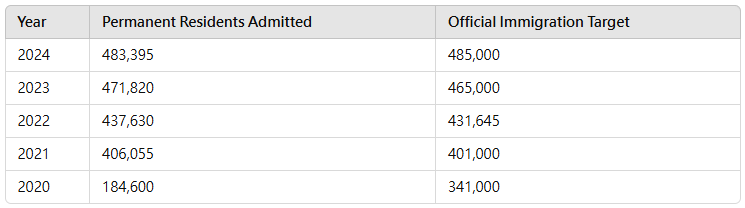
The 2025 reduction to 395,000 PRs isn’t a retreat but a recalibration—Canada aims to balance growth with sustainable infrastructure and services.
2. Seasonal Peaks & Processing Realities in 2024
Monthly admissions fluctuated in 2024, peaking in January (47,765) ,也是 July (47,870) due to smoother travel and faster processing. December dipped to 31,860, reflecting holiday slowdowns.
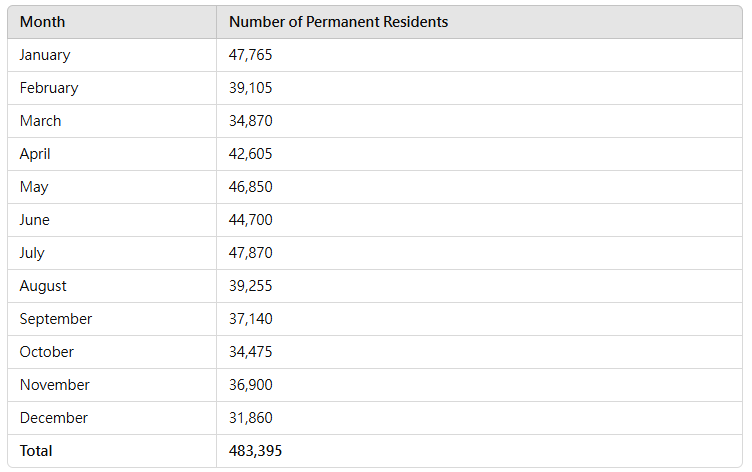
Why It Matters: Apply early in the year to align with IRCC’s peak processing periods.
3. Top Source Countries: Shifting Priorities
While India led with 127,320 PRs (-8.9% from 2023), Cameroon (+81.4%) and Eritrea (+55.3%) saw explosive growth, driven by refugee resettlement and skilled worker programs.
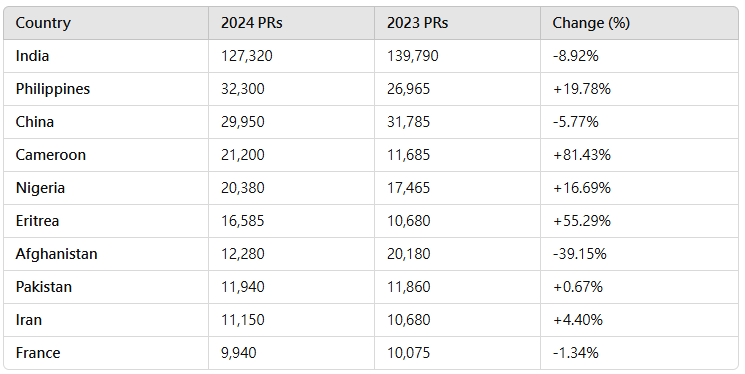
Policy Insight: India’s drop aligns with Express Entry reforms favoring French proficiency and healthcare workers.
4. Where Newcomers Are Settling: Beyond Toronto & Vancouver
Ontario and Quebec remain top destinations, but smaller provinces and cities are rising stars:
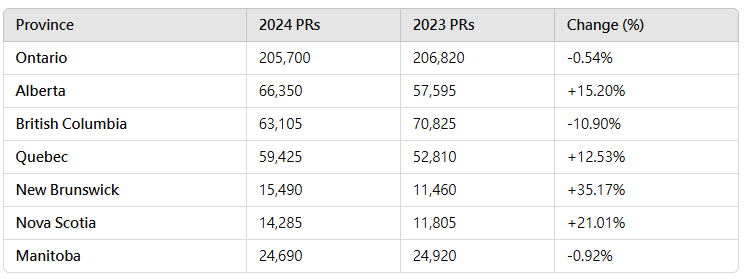
新不伦瑞克省 (+35.2%): Fueled by the 大西洋移民計劃, targeting healthcare and skilled trades.
亚伯达省 (+15.2%): Energy sector jobs and affordable housing attract tech and engineering talent.
Moncton (+42.7%) and Québec City (+41.9%): Lower costs and tailored provincial programs drive growth.
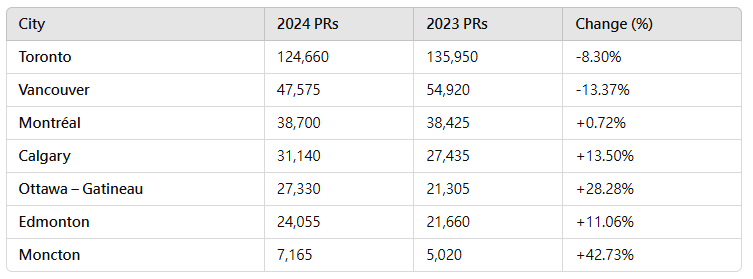
Trend Alert: Toronto (-8.3%) and Vancouver (-13.4%) declines signal a shift toward affordability.
Why Are People Moving to Smaller Cities?
Lower cost of living
More job opportunities in sectors like healthcare and tech
Growing provincial immigration programs targeting specific skills
5. What’s Next for Immigrants?
Tougher Competition: With 836,900 applications pending, 2025–2026 targets mean fewer spots for new applicants.
Focus on In-Canada Candidates: Temporary residents (students, workers) will be prioritized.
Provincial Pathways: Programs like Alberta’s Accelerated Tech Pathway or Nova Scotia’s Critical Construction Worker Stream are golden tickets.
6. How to Prepare for Success
Target Provincial Nominee Programs (PNPs): Align your skills with regional labor shortages (e.g., healthcare in New Brunswick, tech in Calgary).
Improve French Proficiency: Express Entry now awards bonus points for French speakers.
Apply Early: Processing times may lengthen as IRCC tackles backlogs.
Adapt to Thrive Canada’s immigration strategy is evolving—from rapid growth to sustainable integration. For applicants, success will hinge on flexibility: target smaller provinces, master in-demand skills, and stay ahead of policy shifts. While the path to PR is narrowing, opportunities abound for those ready to align with Canada’s priorities.
Stay informed. Stay agile. Your Canadian dream is still within reach.
At Altec Global, we understand the complexities of the Canadian immigration system and are dedicated to helping applicants overcome these obstacles. Whether you’re waiting for your PR application, navigating temporary residence delays, or seeking citizenship, our team is here to guide you through the process and help make your Canadian dream a reality.
Make your personalized guidance on getting the right strategy for immigrating to Canada.