

Altec Global 公司创始人兼首席执行官 Susan Gong(注册会计师、CA、RCIC)的独到见解。.
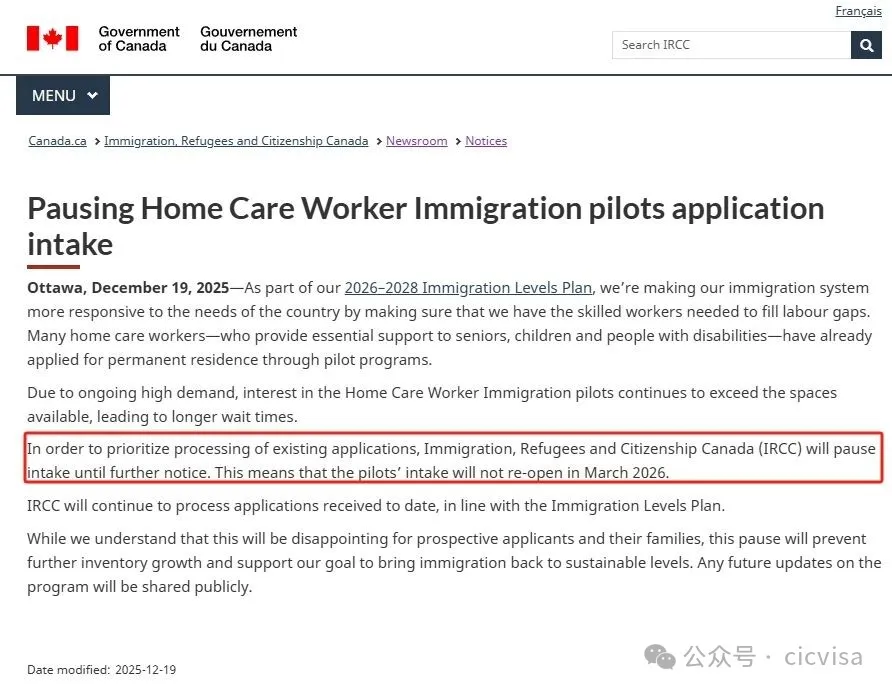
On December 19, Immigration, Refugees and Citizenship Canada (IRCC) announced that starting in 2026, the Home Care Worker Immigration Pilots will pause acceptance of new permanent residence (PR) applications. While applications already submitted will continue to be processed under existing immigration levels plans, no new PR applications will be accepted during the pause period.
This announcement marks an important transition for caregivers and employers, signaling a shift from reliance on a single federal pilot to more strategic, multi-pathway immigration planning.
Which Programs Are Affected?
The pause applies to the following two federal pilot programs:
Home Care Worker Immigration Pilot – Child Care stream
Home Care Worker Immigration Pilot – Home Support stream
These programs previously allowed eligible caregivers to:
Secure compliant caregiver job offers
Meet language, education, and experience requirements
Accumulate Canadian work experience and apply directly for permanent residence
Due to limited quotas and strong demand, these pilots often reached capacity quickly—demonstrating Canada’s ongoing need for childcare and home support workers.
Who Is Affected and What Comes Next?
Caregivers Who Have Already Applied
Applicants with submissions already in the system are not impacted by the pause. IRCC will continue processing these files as planned.
The key priority is to:
Maintain valid work permit status
Continue lawful residence and employment in Canada
Avoid any status issues that could affect application outcomes
Those Planning to Apply in 2026
Individuals who were preparing to apply under these pilots in 2026 will no longer be able to submit new PR applications through these federal streams.
However, existing or future caregiving experience remains highly valuable and may be leveraged through other pathways, such as:
省提名计划 (PNP)
Employer-supported immigration streams
Select skilled worker pathways
Improving language ability and education credentials can further strengthen a caregiver’s overall immigration profile.
Prospective Caregivers and Employers
It is important to note that the pause affects PR pilot programs only—it does not prohibit caregivers from coming to Canada to work.
Families and institutions may still hire caregivers through other temporary work permit channels. Going forward, successful planning will require:
Entering Canada first on a compliant work permit
Accumulating Canadian caregiving experience
Designing a long-term immigration strategy based on provincial needs and individual qualifications
A Shift Toward Strategic, Multi-Pathway Planning
As 江文珊 explains, this policy change does not close the door on caregivers—it changes the approach.
Caregiving experience continues to be in demand across Canada, but future success will depend on coordinating experience, language ability, education, provincial policies, and employer support rather than relying on a single federal pilot.
Altec Global Insight
The pause of new PR applications under the Home Care Worker Immigration Pilots from 2026 to 2030 is a critical timing signal. The pathway has changed, but the opportunity remains.
If you are:
Currently working as a caregiver in Canada
A caregiver who planned to apply through the pilot
A family or organization seeking long-term solutions for caregiver employees
Now is the right time to reassess and plan.
At 欢迎访问顺达集团, we help caregivers and employers navigate today’s evolving immigration landscape and design practical, compliant strategies that align with current policies and future opportunities. Email/ Business Inquiries: ask@altecglobal.com Facebook: Altec Global/CICVISA Instagram: altecglobal.inc Website: www.cicvisa.com WhatsApp: https://api.whatsapp.com/send?phone=14169000797 Make Assessment: https://www.cicvisa.com/en/canadian-immigration-assessment-form/